












Transcription vidéo
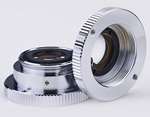
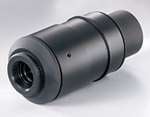
Imaging lens assemblies are vital components for a wide range of cutting-edge applications including machine vision, biomedical instruments, factory automation, and robotics. Before a lens can be made the performance specifications and project requirements must be determined. Once the optical and optomechanical design of the lens is complete, the manufacturing process begins. Rough blanks of specially formulated optical-grade glasses are ground, polished, and centered, converting them into the finished lens elements. Ultrasonic cleaning ensures that all dust and debris is removed from the optics. The lens elements are then coated with an anti-reflection coating in a vacuum chamber for increased light throughput. In-process metrology, such as interferometry, ensures that all optical and mechanical specifications are met, including surface accuracy, centration, and center thickness. Optical lens elements are manufactured to extreme precision. Optomechanical components are precision machined and measured to ensure the lens seats and bore gaps are tightly toleranced and controlled. The outer barrel is often engraved to indicate the manufacturer and important specifications. This allows for ease of identification and serialization of the imaging lens. Now all components are ready to be assembled by a skilled technician. The multiple components of the helical focus mechanism are assembled together. Set screws and adhesives are used to affix the focus and iris knurls in place. Once the housing and focus mechanism are correctly aligned, a guide screw is installed to provide continuous non-rotating focus adjustment. The iris is then carefully assembled one iris leaf at a time. Once all the external optomechanics are complete, focus and iris knobs are added to provide users the ability to lock down their desired working distance and aperture position. Next the optical lens elements are assembled into the housings. Each optical surface must be cleaned and free of dust and debris, as it could impact the performance of the lens. Carefully designed spacers are placed in between lens elements to ensure proper lens positioning. Every lens element must be carefully cleaned and inspected before it's assembled. Large lens elements require additional tools, like a vacuum chuck, to assemble them into their mechanical seat without tilt or decenter. Threaded retaining rings are also installed to secure the optics in place. The completed lens assembly is then carefully inspected and tested to verify that it meets all performance requirements, including image quality and alignment. In-depth evaluation of resolution, contrast, and aberrations, such as with MTF testing, can be done on lenses with more demanding requirements. After final inspection and cleaning, the imaging lens is ready to be shipped to a customer. Edmund Optics has been manufacturing imaging lenses for almost two decades and produces a variety of lenses including fixed focal length lenses, M12 lenses, and telecentric lenses. To learn more about imaging lens assemblies from the Edmund Optics, please visit our website.


ou consulter les numéros d’autres pays
facile à utiliser
entrer les numéros de stock pour commencer
Copyright 2023 | Edmund Optics, Ltd Unit 1, Opus Avenue, Nether Poppleton, York, YO26 6BL, UK
POLITIQUE DE CONFIDENTIALITÉ | POLITIQUE DE COOKIES | CONDITIONS GÉNÈRALES | CONDITIONS GÉNÈRALES B2C | MENTIONS LÉGALES | ACCESSIBILITÉ
L'entreprise Edmund Optics GmbH en Allemagne agit comme un mandataire d'Edmund Optics BV aux Pays-Bas.
Le titulaire du contrat est Edmund Optics BV aux Pays-Bas.
Ce contenu peut comporter des éléments générés ou modifiés à l'aide de l'intelligence artificielle (IA).
The FUTURE Depends On Optics®