




XR|AR|MR
La réalité étendue (XR), qui englobe la réalité augmentée (AR) et la réalité mixte (MR), repose sur des composants optiques intégrés permettant de capter, de manipuler, de mesurer et de diffuser la lumière au sein de systèmes compacts et hautement performants. De l'imagerie et la détection à l'éclairage, en passant par la validation et l'intégration dans les systèmes, chaque élément joue un rôle essentiel dans les performances globales de l'appareil. Edmund Optics propose une gamme complète de solutions comprenant des objectifs, des filtres, des fenêtres, des dispositifs de mise en forme de la lumière, des systèmes de polarisation, des outils de test et des matériaux d'assemblage, permettant ainsi aux ingénieurs de concevoir, de prototyper et d'optimiser efficacement les technologies immersives de nouvelle génération.
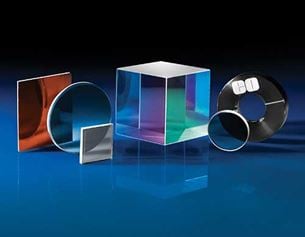
Optiques de Polarisation
Les Optiques de Polarisation contrôlent l'orientation du champ électrique de la lumière, ce qui offre de puissantes possibilités pour l'imagerie computationnelle et l'observation astronomique. En utilisant des composants tels que des polariseurs et des lames à retard pour manipuler et mesurer les états de polarisation, ces systèmes peuvent améliorer le contraste, réduire l'éblouissement et révéler des informations qui ne sont pas accessibles par le seul biais de l'intensité ou de la longueur d'onde. Dans le domaine de la vision industrielle, cela permet d'améliorer la détection des caractéristiques et l'analyse des matériaux, tandis qu'en astronomie, cela aide les scientifiques à étudier la façon dont la lumière interagit avec la poussière, les champs magnétiques et les atmosphères planétaires afin de mieux comprendre les environnements célestes.
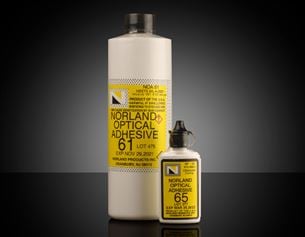
Adhésifs Optiques
Les Adhésifs Optiques sont des matériaux spécialisés utilisés pour assembler et intégrer des composants optiques tout en garantissant une transmission élevée et une distorsion minimale. Conçus avec des indices de réfraction contrôlés, ces adhésifs réduisent les pertes par réflexion et améliorent le couplage optique entre les éléments. Dans les systèmes XR, les adhésifs optiques jouent un rôle essentiel dans l'assemblage de dispositifs compacts et hautement performants, en garantissant un alignement stable et une transmission efficace de la lumière dans des applications telles que les modules de capteurs, les empilements d'écrans et l'intégration de guides d'ondes.
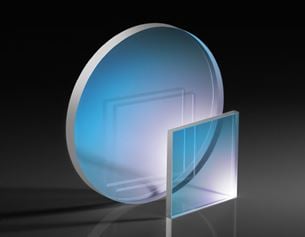
Fenêtres Spécialisées
Les Fenêtres Optiques à Profil Bas sont conçues pour offrir une protection et une transmission optique élevée dans les applications où la taille, le poids et l'épaisseur constituent des contraintes essentielles. Fabriquées à partir de matériaux résistants, tels que le verre trempé, ces fenêtres minces offrent d'excellentes performances optiques tout en réduisant l'encombrement du système. Dans les applications de réalité étendue (XR), on utilise couramment des fenêtres à profil bas pour protéger les caméras, les capteurs et les éléments d'affichage, ce qui permet de concevoir des appareils compacts et légers sans compromettre la qualité de l'image ni l'intégrité du signal.
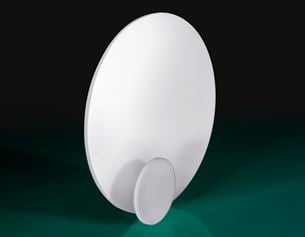
Diffuseurs Optiques
Les dispositifs de modelage de la lumière et les diffuseurs servent à contrôler et à répartir l'éclairage au sein des systèmes optiques, ce qui permet d'obtenir un éclairage uniforme et de réduire au minimum les variations d'intensité. En diffusant et en homogénéisant la lumière provenant de sources telles que les LED et les lasers, ces composants améliorent les performances du système et la précision des mesures. Dans les applications de réalité étendue (XR), les diffuseurs jouent un rôle essentiel dans le suivi oculaire, la détection de la profondeur et l'éclairage de l'écran, domaines dans lesquels une répartition homogène et contrôlée de la lumière est indispensable.
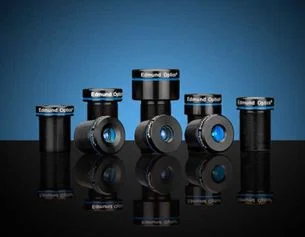
Objectifs M12 (Objectifs de Monture S)
Les objectifs compacts / sur circuit sont conçus pour offrir des performances d'imagerie de haute qualité dans des facteurs de forme extrêmement réduits, ce qui les rend parfaits pour les systèmes optiques soumis à des contraintes d'espace. Généralement disponibles dans des formats tels que le M12 (monture S), ces objectifs prennent en charge une large gamme de tailles de capteurs et de résolutions, tout en garantissant une faible distorsion et une captation efficace de la lumière. Grâce à leur conception compacte, ils sont parfaitement adaptés aux applications XR, notamment l'oculométrie, le SLAM et la vision embarquée, où la taille, le poids et la flexibilité d'intégration sont des facteurs essentiels.
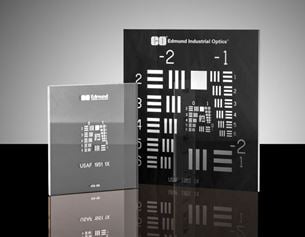
Mires de Test
Les Mires de Test et de Mesure Optiques sont des outils de haute précision utilisés pour évaluer, étalonner et optimiser les performances des systèmes d'imagerie et des systèmes optiques. Conçues à partir de motifs et de matériaux d'une grande précision, ces mires permettent une analyse quantitative de la résolution, de la distorsion, du contraste et de la précision des couleurs. Dans les applications de réalité étendue (XR), elles jouent un rôle essentiel dans la validation des systèmes de caméras, l'alignement des composants optiques et la garantie d'une performance visuelle homogène entre les technologies de détection et d'affichage.
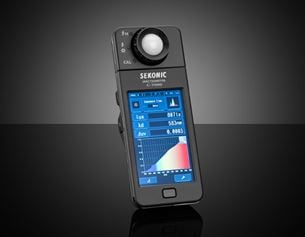
Test et Détection
Les solutions de Test et de Détection servent à évaluer, étalonner et optimiser les performances des systèmes optiques et d'imagerie. Ces technologies permettent de mesurer avec précision des paramètres tels que l'intensité, la réponse spectrale et la qualité d'image, facilitant ainsi la validation et l'intégration précises du système. Dans les applications de réalité étendue (XR), les outils de test et de détection sont essentiels pour caractériser les performances des caméras, régler les systèmes d'éclairage et garantir une qualité visuelle constante dans les architectures avancées de détection et d'affichage.
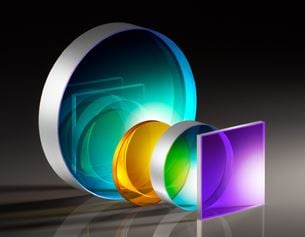
Éléments Optiques Diffractifs (DOE)
Les Éléments Optiques Diffractifs (DOE) sont fabriqués pour avoir des motifs de microstructure qui modifient et contrôlent la phase de la lumière laser transmise. En modifiant la microstructure, il est possible pour un élément optique diffractif de produire presque n'importe quel profil d'intensité ou forme de faisceau pour répondre aux exigences de l'application. Ces éléments optiques sont fabriqués à partir de divers substrats, notamment le plastique, la silice fondue, le germanium, le saphir et le séléniure de zinc (ZnSe), ce qui permet de les utiliser avec les lasers UV, visibles et infrarouges (IR). Les Éléments Optiques Diffractifs sont généralement conçus pour une longueur d'onde laser spécifique et leurs performances dépendent de la longueur d'onde.
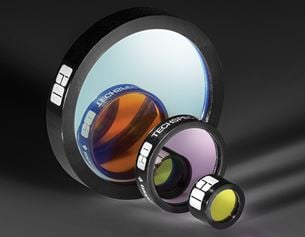
Filtres Interférentiels Passe-Bande 700 - 1650 nm avec Traitement Traditionnel
Infrared (NIR/SWIR) Filters are designed to selectively transmit or block specific wavelengths in the near-infrared and shortwave infrared spectrum, enabling precise control of light in imaging and sensing systems. By isolating desired spectral bands, these filters improve signal-to-noise ratio, reduce ambient light interference, and enhance detection accuracy. They are widely used in XR applications such as eye tracking, depth sensing, and biometric imaging, where reliable performance under varying lighting conditions is essential.
ou consulter les numéros d’autres pays
facile à utiliser
entrer les numéros de stock pour commencer
Copyright 2023 | Edmund Optics, Ltd Unit 1, Opus Avenue, Nether Poppleton, York, YO26 6BL, UK
POLITIQUE DE CONFIDENTIALITÉ | POLITIQUE DE COOKIES | CONDITIONS GÉNÈRALES | CONDITIONS GÉNÈRALES B2C | MENTIONS LÉGALES | ACCESSIBILITÉ
L'entreprise Edmund Optics GmbH en Allemagne agit comme un mandataire d'Edmund Optics BV aux Pays-Bas.
Le titulaire du contrat est Edmund Optics BV aux Pays-Bas.
Ce contenu peut comporter des éléments générés ou modifiés à l'aide de l'intelligence artificielle (IA).
The FUTURE Depends On Optics®